When anxiety hits, it can feel overwhelming and difficult to control. Your heart may start racing, your breathing may become shallow, and your thoughts may begin to spiral.
In those moments, it’s common to feel like you need immediate relief—but not everyone knows how to calm anxiety quickly and effectively.
The good news is that there are simple, therapist-approved techniques that can help calm anxiety in just a few minutes. These strategies are designed to help you slow your body’s stress response, regain control of your thoughts, and feel more grounded.
If you’ve been experiencing frequent anxiety in the Rio Grande Valley, anxiety counseling can help you build both immediate coping tools and long-term strategies for relief.
1. The 4-7-8 Breathing Technique
One of the fastest ways to calm anxiety is by slowing down your breathing.
When you feel anxious, your breathing often becomes quick and shallow. This signals your body that something is wrong, which can make anxiety feel even worse. The 4-7-8 breathing technique helps reverse this by activating your body’s relaxation response.
Here’s how to do it:
Inhale slowly through your nose for 4 seconds
Hold your breath for 7 seconds
Exhale slowly through your mouth for 8 seconds
Repeat this cycle 3 to 5 times.
As you practice this, you may notice your heart rate begin to slow and your body start to relax. Even if your thoughts are still racing, calming your breathing can reduce the intensity of anxiety fairly quickly.
2. Ground Yourself Using the 5-4-3-2-1 Method
Anxiety often pulls your mind into the future—into “what if” thinking and worst-case scenarios.
Grounding techniques help bring your attention back to the present moment, which can interrupt that cycle.
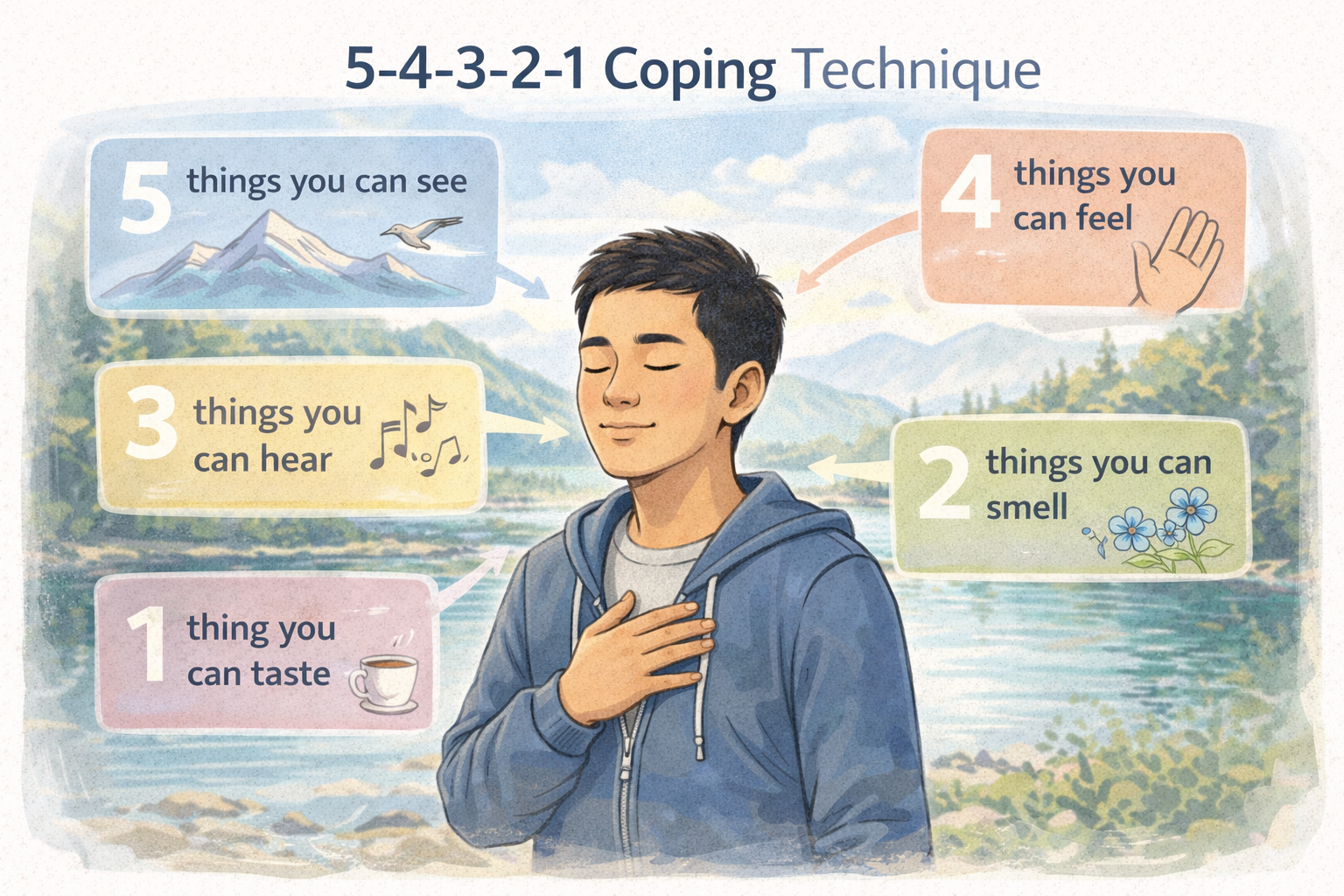
Try the 5-4-3-2-1 method:
5 things you can see around you
4 things you can feel (your clothes, the chair, your feet on the ground)
3 things you can hear
2 things you can smell
1 thing you can taste
This exercise helps shift your focus away from anxious thoughts and back into your physical environment. It can be especially helpful during moments of intense anxiety or panic.
👉 You can also read more about how anxiety shows up in everyday life in our article: signs your anxiety is more than normal stress
3. Slow Your Thoughts Down
Anxiety often creates a rapid stream of thoughts that feel overwhelming and hard to control. You might notice your mind jumping quickly from one worry to another.
Instead of trying to stop your thoughts completely, try to slow them down and question them.
Ask yourself:
“What is actually happening right now?”
“Am I assuming the worst?”
“Is this thought helping me or hurting me?”
This process helps create distance between you and your thoughts. Over time, it can help you feel less controlled by anxious thinking.
4. Relax Your Body Intentionally
Anxiety is not just mental—it’s physical. Your body may be holding tension without you even realizing it.
Common areas where people carry anxiety include:
Shoulders
Jaw
Neck
Hands
Take a moment to scan your body and gently release tension:
Drop your shoulders
Unclench your jaw
Relax your hands
Take a slow, steady breath
These small physical adjustments can send signals to your brain that you are safe, which can help reduce anxiety.
5. Use a Simple Reassurance Statement
When anxiety is high, your mind may focus on fear, uncertainty, or worst-case scenarios.
Using a simple reassurance statement can help interrupt that cycle.
Try repeating phrases such as:
“I am safe right now.”
“This feeling will pass.”
“I can handle this moment.”
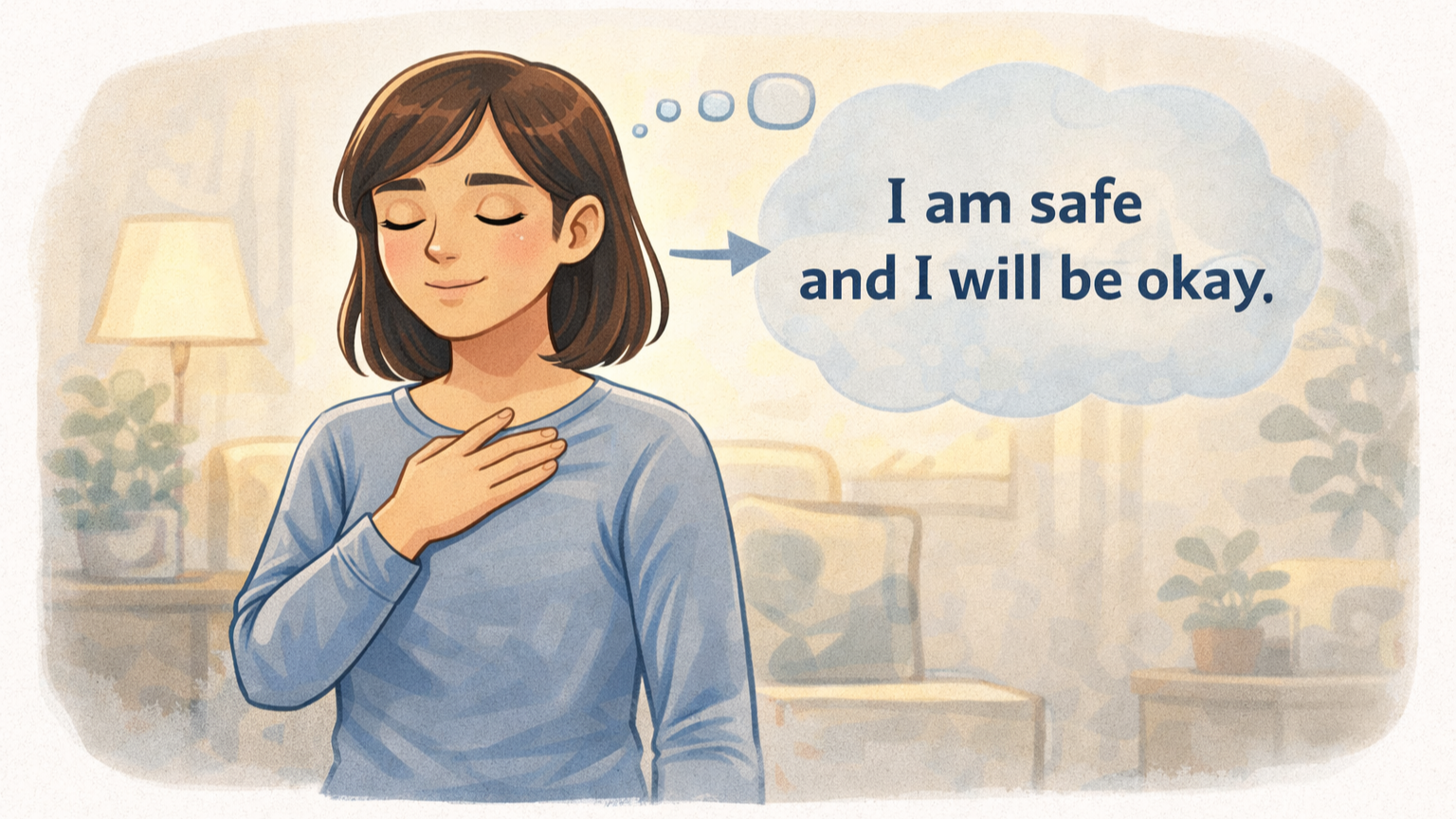
Even if you don’t fully believe the statement at first, repeating it can help create a sense of stability and calm.
6. Change Your Environment
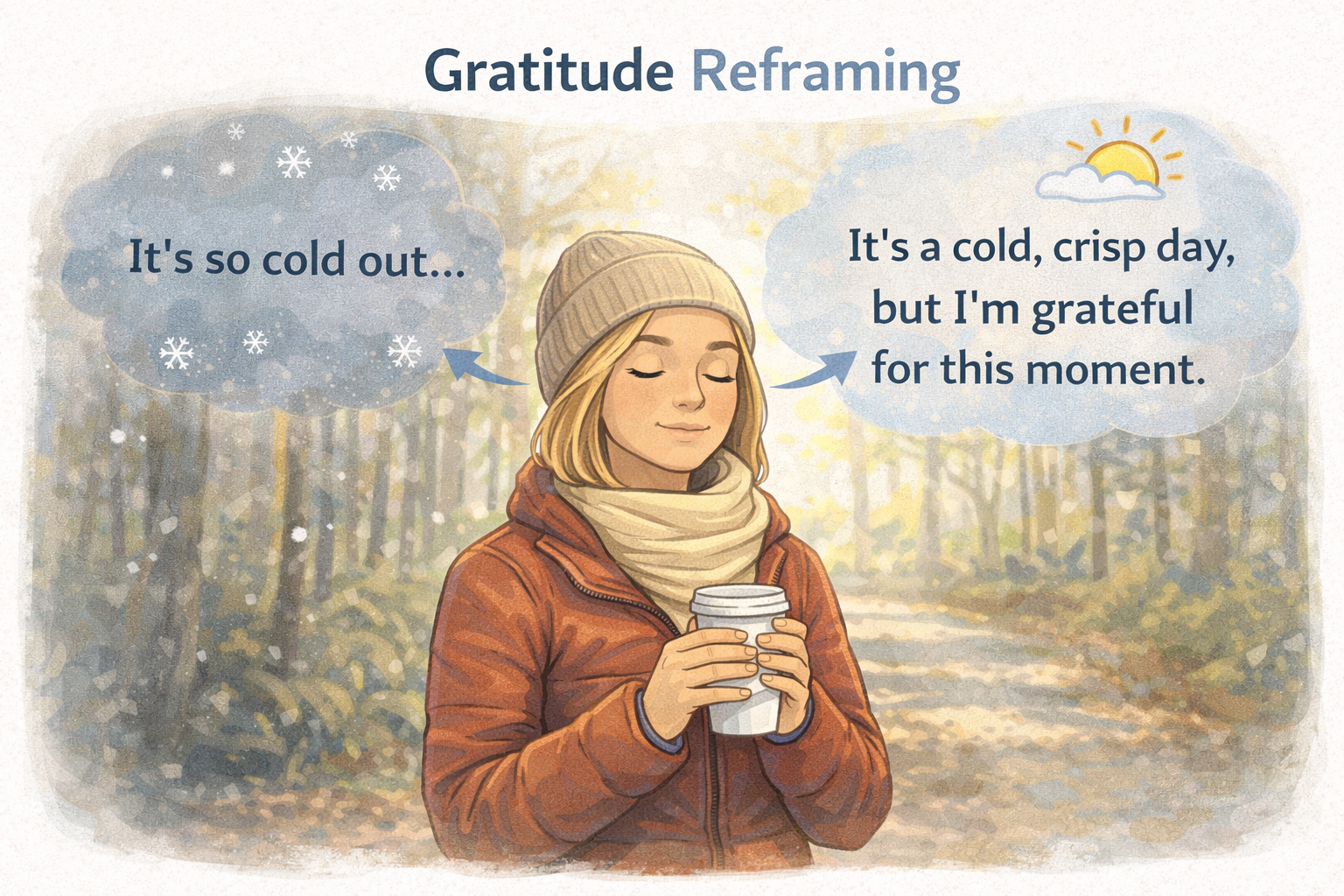
Sometimes anxiety can build when you feel stuck in one place or situation.
A small change in your environment can help reset your mind and body.
You might try:
Stepping outside for fresh air
Walking to another room
Splashing cold water on your face
Taking a short walk
These simple changes can interrupt anxious patterns and give your nervous system a chance to settle.
7. Focus on One Simple Task
When anxiety feels overwhelming, your mind may be trying to process too many things at once.
Focusing on one small, simple task can help bring your attention back to something manageable.
For example:
Drink a glass of water slowly
Organize a small area (like your desk)
Take a few slow, intentional breaths
This helps shift your brain out of overwhelm and into a more focused, grounded state.
When Quick Techniques Aren’t Enough
These techniques can be very effective in calming anxiety in the moment. However, if anxiety is happening frequently, intensely, or interfering with your daily life, it may be helpful to look beyond quick fixes.
Therapy can help you:
Understand the root causes of your anxiety
Identify triggers and patterns
Learn long-term coping strategies
Build confidence in managing stress
If you are searching for anxiety counseling in McAllen, Edinburg, Pharr, Mission or anywhere else in the Rio Grande Valley, professional support can help you move beyond short-term relief and toward lasting change.
Take the Next Step
You don’t have to manage anxiety on your own.
If anxiety is affecting your daily life, reaching out for support can be an important first step. Therapy can provide both immediate tools and long-term strategies to help you feel more in control.
👉 You can schedule a counseling appointment with Dymphna Counseling Center to begin working toward lasting relief.
We proudly serve individuals throughout Edinburg, McAllen, Mission, Pharr, and the surrounding Rio Grande Valley.
