A Complete Guide for Safer, Calmer Roads in Texas
How to Stay Calm, Avoid Road Rage, and Drive Safely:
Driving is one of the most common daily activities, yet it places you in a fast-moving, high-stakes environment where your emotional state directly impacts safety. A single moment of frustration, distraction, or anger can lead to poor decisions with serious consequences.
For drivers in Texas, where long commutes, heavy traffic, and extreme weather are part of everyday life, managing emotions behind the wheel is not just helpful—it is essential.
This guide breaks down why emotional control matters, what triggers stress while driving, and practical strategies to help you stay calm, focused, and safe.
The Importance of Managing Emotions While Driving
Driving is not purely mechanical—it is deeply cognitive and emotional. Every decision you make behind the wheel is influenced by how you feel in that moment.
When emotions rise, your ability to think clearly and react appropriately declines.
How Emotional Driving Affects Safety
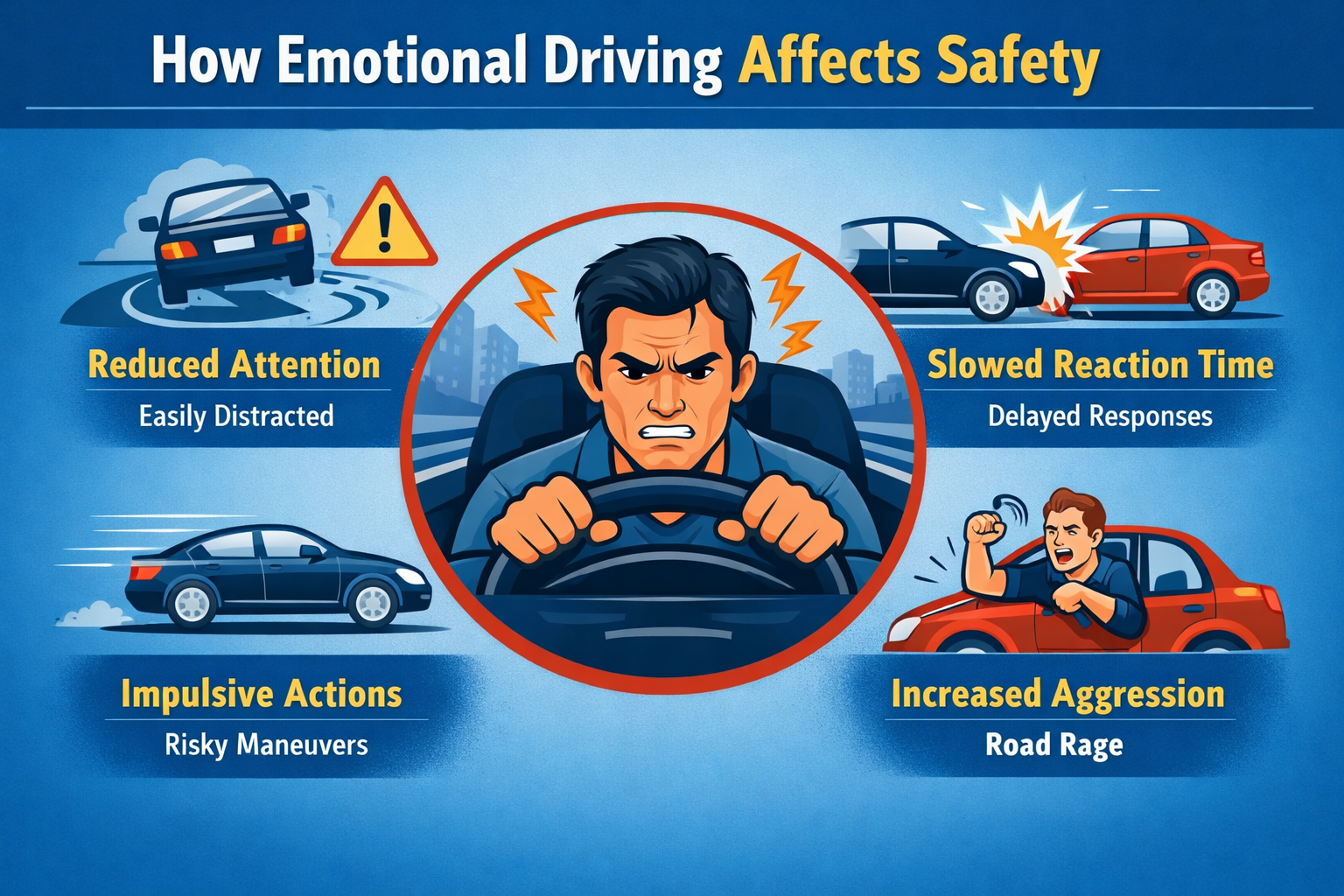
Reduced attention span: You focus on frustration instead of road conditions
Slower reaction times: Delayed responses to sudden hazards
Impulsive decisions: Risky lane changes, speeding, or tailgating
Increased aggression: Escalation into road rage situations
Even mild emotional distress can significantly impact driving performance. Over time, repeated emotional driving increases the likelihood of accidents and legal consequences.
Why Driving Often Leads To Feeling Emotionally Drained
Many drivers underestimate how mentally exhausting driving can be.
Driving requires constant attention, rapid decision-making, and continuous risk assessment. When combined with external stressors, it becomes cognitively demanding.
Key Reasons Driving Feels Draining
Continuous micro-decisions: Lane positioning, braking, merging
Environmental unpredictability: Traffic, weather, other drivers
Mental overload: Managing navigation, time pressure, and distractions
Emotional carryover: Stress from work or personal life
Over time, this sustained cognitive effort leads to emotional fatigue, making it harder to stay patient and composed.
Causes of Stressful Driving in Texas
Texas presents unique driving conditions that can amplify emotional strain.
Common Stressors for Texas Drivers
Heavy urban traffic in cities like Houston, Dallas, and Austin
Long commute distances, often exceeding 30–60 minutes
High-speed highways, where aggressive driving is more common
Extreme heat, which can increase irritability and fatigue
Frequent construction zones, causing delays and confusion
Rapid population growth, leading to more congested roadways
These factors create an environment where stress can build quickly, especially during peak travel times.
Common Emotional Triggers While Driving
Certain situations consistently provoke strong emotional reactions:
Traffic congestion and unexpected delays
Being cut off or tailgated
Running late for work or appointments
Misinterpretation of other drivers’ actions
Personal stress carried into the vehicle
Recognizing these triggers allows you to anticipate and manage your response instead of reacting automatically.
The Neuroscience of Emotional Driving
When you experience anger or stress, the brain’s amygdala activates, triggering a fight-or-flight response. This releases adrenaline and shifts control away from the prefrontal cortex, which governs rational thinking.
The Result:
Faster reactions, but poorer judgment
Heightened sensitivity to perceived threats
Increased likelihood of aggressive behavior
This neurological shift explains why even calm individuals may act differently behind the wheel.
Strategies To Help Manage Emotions While Driving
Managing emotions while driving requires intentional habits and mental discipline.
1. Start with Pre-Drive Awareness
Before driving, assess your emotional state. If you feel stressed or distracted, take a moment to reset before starting the vehicle.
2. Eliminate Time Pressure
Leave earlier than necessary whenever possible. Removing urgency reduces anxiety and discourages risky behavior.
3. Use Controlled Breathing
Practice simple breathing techniques to calm your nervous system:
Inhale for 4 seconds
Hold for 4 seconds
Exhale for 6 seconds
This can be done safely while stopped or during low-risk driving moments.
4. Reframe Your Thinking
Reframing means changing how you interpret what’s happening on the road so you don’t react emotionally.
Most frustration while driving comes from assumptions—like thinking another driver is being careless on purpose or that delays are ruining your day. Shifting your perspective helps keep those reactions in check.
Simple reframes you can use:
“This driver is reckless” → “I’ll give them space and stay safe”
“They did that on purpose” → “They might not have seen me”
“I’m stuck in traffic” → “This delay is temporary”
“I need to get there faster” → “Getting there safely matters more”
A helpful rule is to focus on what you can control—your speed, your distance, and your reaction—not other drivers.
By adjusting your thinking, you reduce stress, avoid escalation, and stay focused on driving safely.
5. Avoid Engagement with Aggressive Drivers
When another driver is acting aggressively, your safest option is to disengage completely. Responding—even in small ways—can escalate the situation quickly.
Avoid eye contact, gestures, or trying to “correct” their behavior. What may feel like a minor reaction to you can be perceived as a challenge by the other driver.
Safer ways to handle aggressive drivers:
Let them pass instead of competing for space
Increase your following distance
Change lanes if it’s safe to do so
Stay predictable and avoid sudden movements
If a situation feels threatening, prioritize getting to a populated, well-lit area rather than continuing to engage.
Do not respond to provocation.
Avoid eye contact, gestures, or retaliation. Distance is the safest response.
6. Create a Calm Driving Environment
Play calming music or podcasts
Keep your vehicle clean and comfortable
Reduce unnecessary noise or distractions
A stable environment supports emotional control.
Steps Texans Can Take To Stay Relaxed While Driving
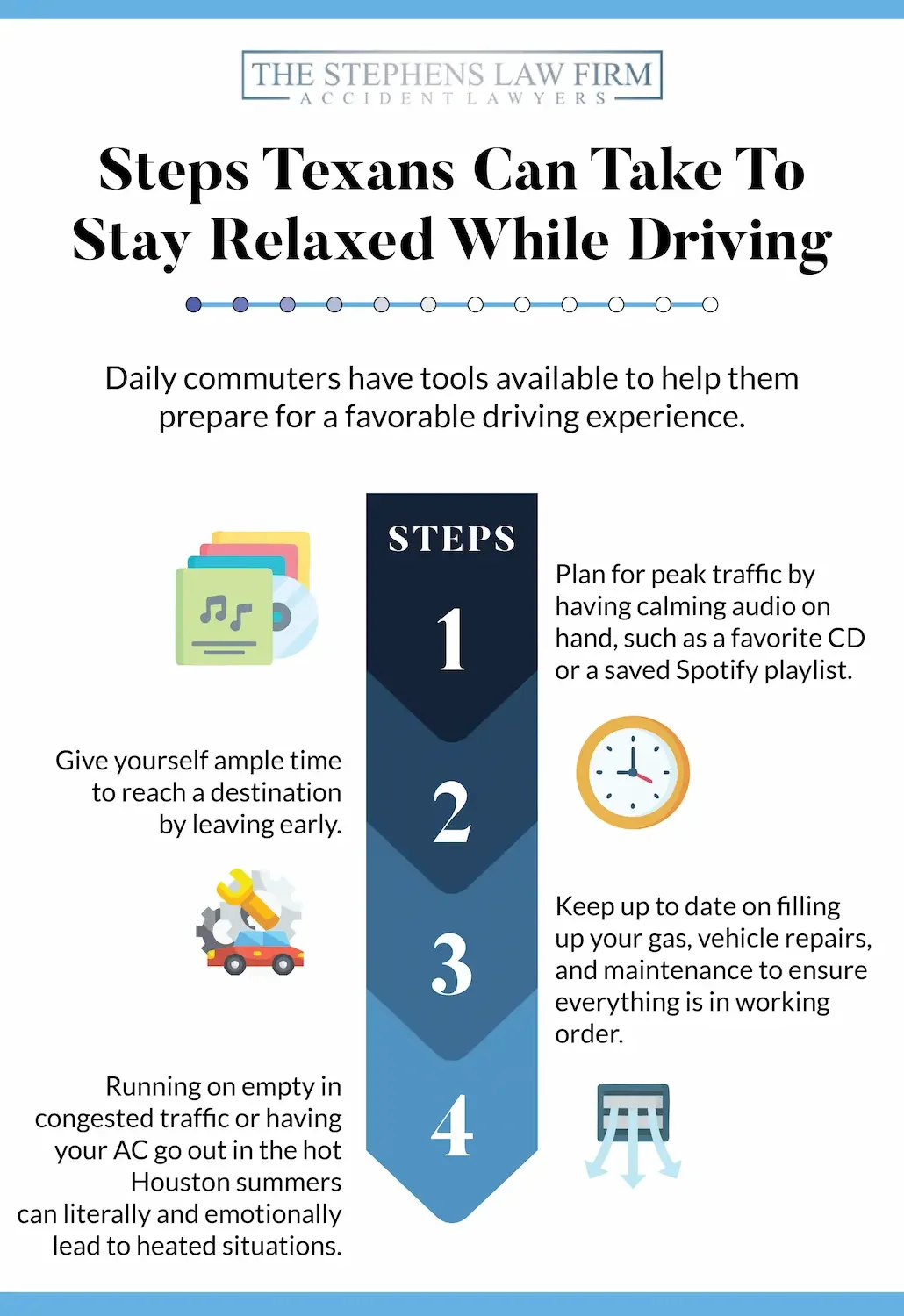
Given the unique challenges of Texas roads, drivers can take additional steps to maintain composure:
Plan routes in advance using traffic apps to avoid congestion
Drive during cooler times of day when possible to reduce heat-related fatigue
Stay hydrated, especially during long drives
Maintain your vehicle’s air conditioning system for comfort
Allow extra travel time for long-distance commutes
These practical adjustments help reduce both physical and emotional strain.
Effective Ways To Relax After a Stressful Drive
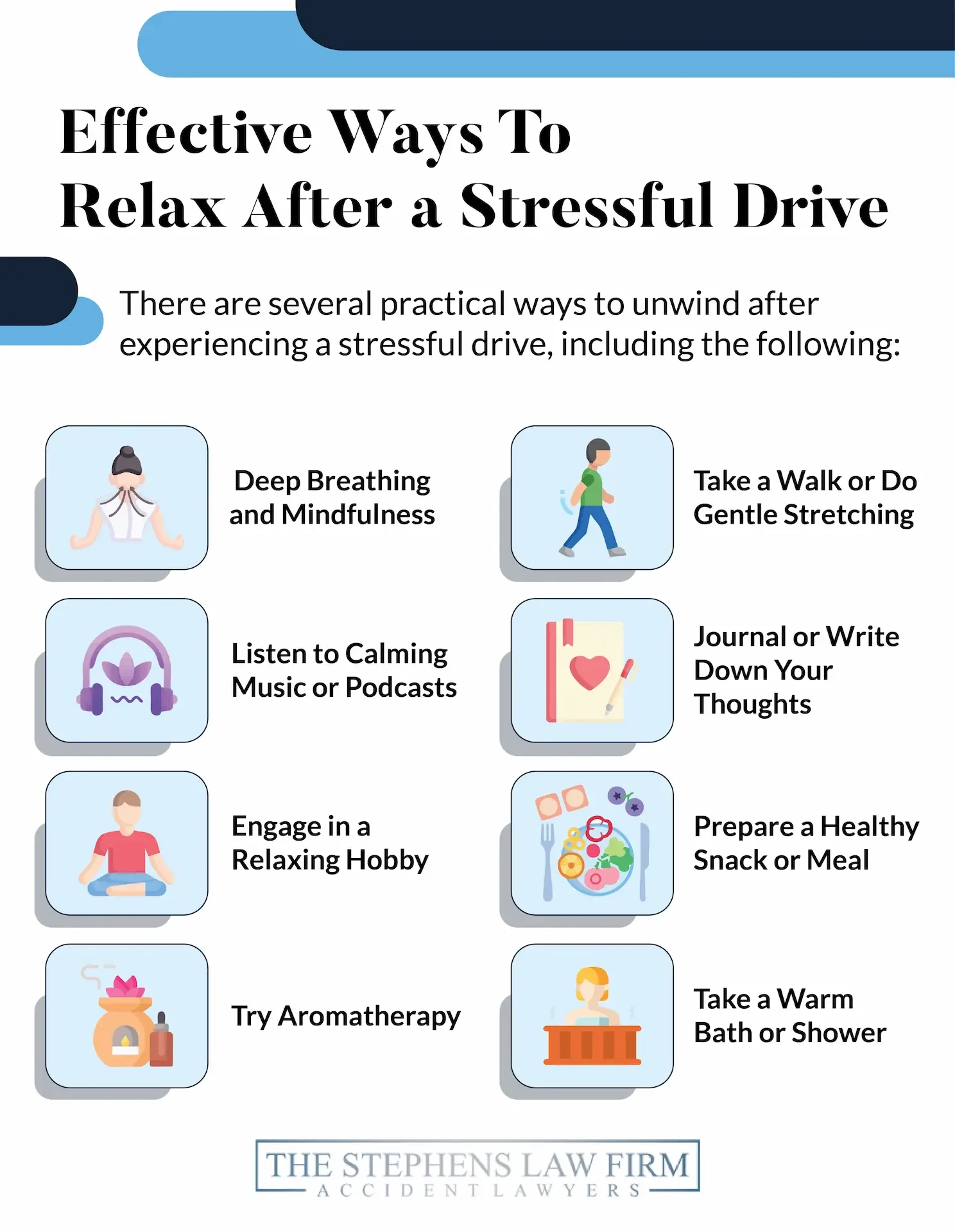
Post-Drive Relaxation Techniques
Managing emotions does not stop when you park your car. Taking time to decompress after driving helps prevent stress from carrying into the rest of your day.
Sit quietly in your car for 1–2 minutes before exiting
Take slow, deep breaths to reset your nervous system
Stretch or take a short walk after arriving
Avoid immediately engaging in stressful tasks
Listen to calming audio before transitioning to your next activity
These small habits help your mind and body return to a balanced state.
Essential Resources for Drivers in Texas
Access to reliable resources can make driving safer and less stressful.
Helpful Texas Driver Resources
Construction and detour alerts
Emergency roadside assistance services
For additional insights on managing emotions while driving and understanding potential legal implications, visit:
https://joestephenslaw.com/managing-your-emotions-while-driving/
For more general information about texas traffic and driving, information can be found at:
Texas Department of Transportation
Prioritize a Safe and Calm Driving Experience
You cannot control traffic, road conditions, or the behavior of other drivers—but you can control how you respond.
By understanding emotional triggers, applying practical coping strategies, and building long-term emotional resilience, you reduce risk and improve your overall driving experience.
Safe driving is not just about skill—it is about mindset. When you prioritize calm, focused driving, you protect yourself, your passengers, and everyone sharing the road.
Emotional Wellness and Safe Driving Support in McAllen, Texas
Managing emotions while driving is especially important for residents of McAllen and the Rio Grande Valley, where daily commutes, traffic congestion, and long driving distances can increase stress levels.
If you find yourself feeling overwhelmed, anxious, or easily frustrated behind the wheel, you’re not alone. Many drivers in the Rio Grande Valley experience heightened stress due to busy roadways, heat, and time pressure.
Learning how to stay calm while driving is not just about safety—it’s also about improving your overall emotional well-being.
Counseling for Emotional Regulation in the Rio Grande Valley
If driving stress, anxiety, or emotional overwhelm is affecting your daily life, working with a professional can help you build healthier coping strategies.
Our practice offers support for individuals in McAllen, Texas, and throughout the Rio Grande Valley who are looking to:
Manage stress and anxiety more effectively
Improve emotional regulation in high-pressure situations
Reduce anger and frustration while driving
Build long-term coping skills for everyday challenges
Through evidence-based approaches, we help you develop practical tools that can be applied both on and off the road.
We proudly work with clients across:
McAllen
Edinburg
Mission
Pharr
Weslaco
Brownsville
Whether you’re dealing with driving-related stress or broader emotional challenges, support is available locally.
